What is Pilates?
Many people initially think of Pilates as a special form of yoga, just without the downward dog pose and the concluding "Om." Slow, not very strenuous, and especially suitable for women - these and other prejudices persist. However, Pilates exercises can be extremely demanding and just as effective under proper guidance, similar to a session of functional training or HIIT. Pilates combines full-body training - exercises like crunches, forearm or side plank, standing balance, and pelvic tilts - with a flowing breath. One connects the exhale with the contraction, and the inhale occurs synchronously with the relaxation. This is intended to strengthen the body and calm the mind. The focus is always on the core, the so-called "Powerhouse": From the ribs to the pelvis, all muscles in the upper body are strengthened through slow, highly concentrated movements. The inventor of this holistic workout is Joseph Hubertus Pilates. He gained recognition during World War I for training the sick in the hospital in a way that helped them recover faster. For this, he developed a large wooden frame with springs - visually a mix of a stretching board and a rowing machine. This equipment, in its modern form known as the Reformer, is still used in many Pilates studios today. Pilates is an intense but gentle strength training focusing on the core. Here you will find all the information about the training method and the best tips for beginners.
What does Pilates train?
Those familiar with Pilates are likely aware of the term Powerhouse. This refers to the body's center that participants activate at the beginning of each Pilates exercise. The Powerhouse is the powerhouse of our body. It's no coincidence that Joseph Hubertus Pilates' motto was "All strength comes from the core." The Powerhouse includes the entire abdominal muscles - front, side, and back abdominal walls - as well as the pelvic floor and lower back muscles. What makes Pilates so effective: You not only train the superficial muscles but also specifically target your deep muscles. At the same time, your muscles in the upper and lower body also work, making Pilates the ideal full-body workout.
These are the additional positive effects of Pilates:
- You define your muscles and strengthen your entire body.
- You improve your posture.
- You increase your overall flexibility.
- You prevent complaints, especially in the hip and shoulder areas.
- You develop a better body awareness.
Pilates Exercises: The Six Principles
Each Pilates session follows six fundamental principles that its founder, Joseph Pilates, worked with. They are inspired by Eastern training methods such as martial arts and yoga:
Centering: The stabilization of the core is the focus. Every Pilates exercise and movement begins with activating the core.
Breathing: A calm, flowing breath synchronized with the movements ensures adequate oxygen supply to the muscles.
Control: Movements in Pilates are slow, deliberate, and controlled. The goal is always a technically flawless execution while engaging the core.
Concentration: Attention in Pilates is on the working muscles and breathing. This helps to execute the movements precisely.
Precision: Each Pilates exercise has a specific sequence with clear instructions. It is essential to follow these as precisely as possible, following the motto "quality over quantity."
Flow of Movement: In Pilates, there is always a flow. This is achieved through dynamic transitions between exercises and the flowing breath. Each participant can determine the tempo of the movements.
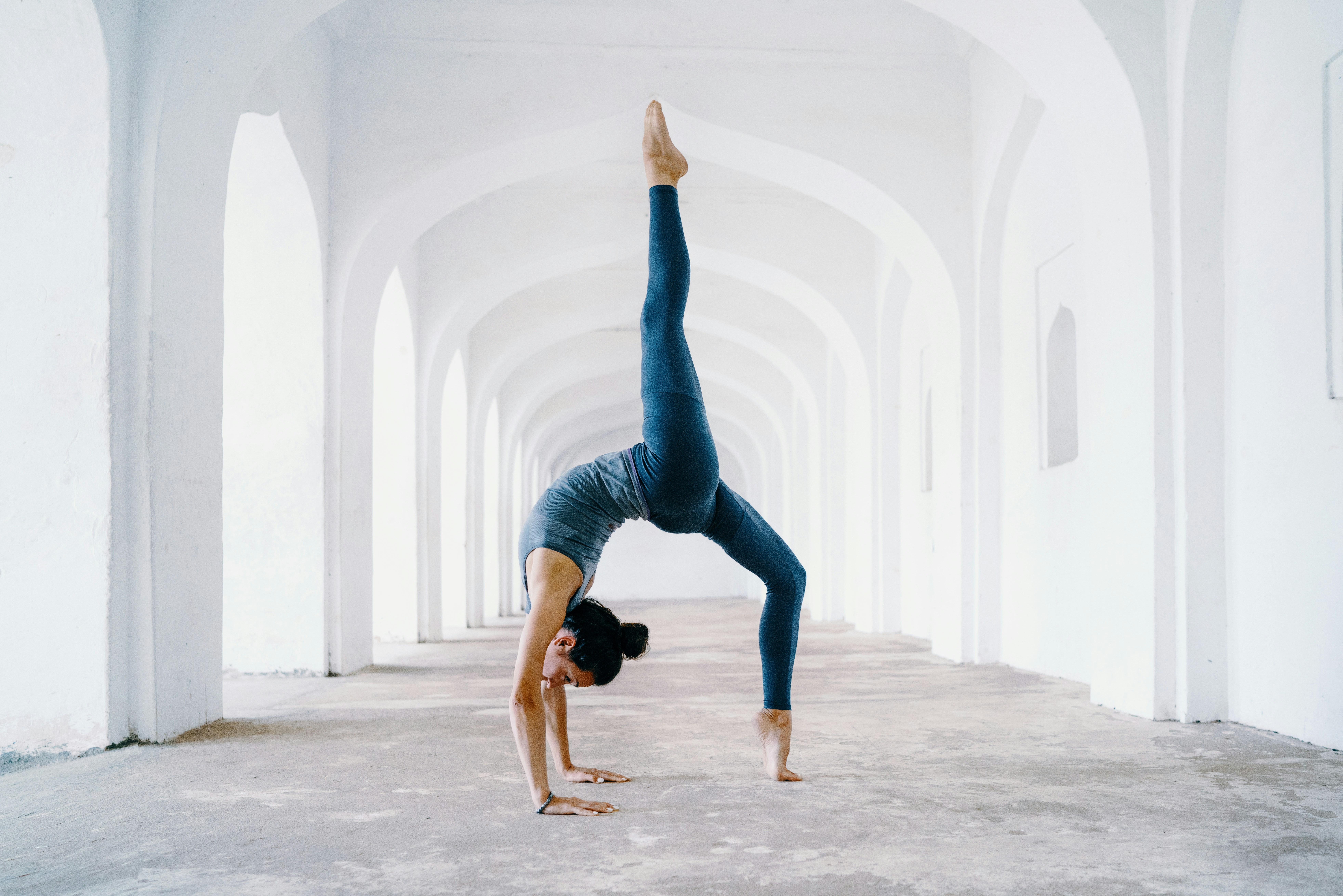
The exercises you can expect in Pilates include dynamic movements like crunches, arm and leg lifts in a tabletop position, or the shoulder bridge with pelvic tilts. Additionally, there are static holds, such as plank variations like forearm and side planks or the V-sit with extended legs and a reclined upper body.
Pilates
- Origin: Pilates is of German origin and was developed in the early 20th century as a training method for the healing of war wounded.
- Breathing: In Pilates, participants typically inhale through the nose and exhale through the mouth.
- Sequence: The transitions between Pilates sequences can be fluid, but repetitions and counts are used within each exercise.
- Spirituality: Pilates focuses only marginally on mindfulness. The primary emphasis is on gentle strength building. It's all about the Powerhouse, training the pelvis, abdomen, and lower back.
Yoga
- Origin: Yoga is considered a philosophical doctrine from India and is thousands of years old.
- Breathing: In yoga exercises, breathing is almost exclusively done through the nose.
- Sequence: The individual poses (Asanas) in yoga are held over several breaths or combined in a flowing sequence (Flow).
- Spirituality: Alongside physical fitness exercises, yoga includes meditations, mindfulness practices, and self-reflection. Originally, yoga was developed to prolong meditation.
Conclusion
Pilates is an intense yet gentle full-body strength training workout. The focus in Pilates exercises is on the Powerhouse, keeping the core engaged throughout the training. With Pilates, you specifically target your deep muscles in the abdomen, pelvic floor, and lower back. Pilates improves posture, enhances flexibility, and strengthens the entire musculoskeletal system. Pilates exercises follow six fundamental principles: Centering, Breathing, Control, Concentration, Precision, and Flow of Movement. In contrast to yoga, Pilates does not include spiritual elements like meditation and self-reflection. The emphasis is on physical fitness. Pilates is particularly beneficial for women before, during, and after pregnancy to strengthen the pelvic floor.